
Tag: wound care

  • The “Iceberg” Wound: Understanding Deep Tissue Injuries 

    The “Iceberg” Wound: Understanding Deep Tissue Injuries 

    When we think of a skin injury we usually think of something that happens from the outside in such as  a scrape, a cut, or a blister. As an in-home nurse practitioner specializing in wound care, I often see a much more deceptive type of wound: the Deep Tissue Injury (DTI). 

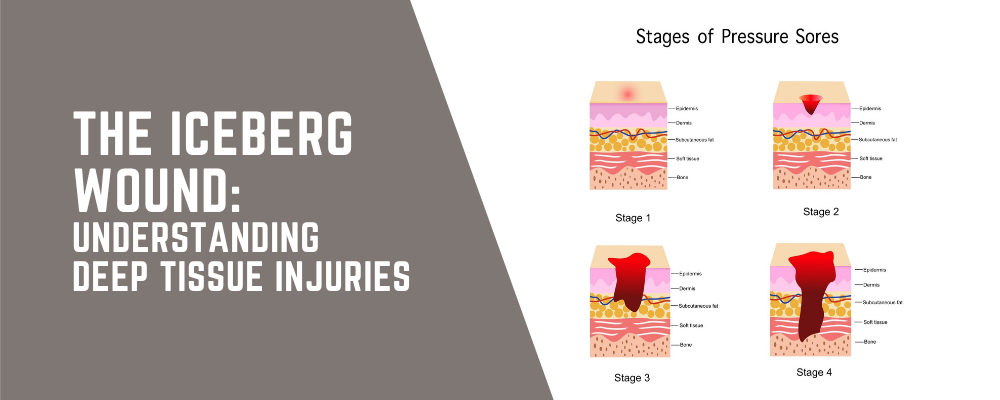
    Unlike a typical scrape, a DTI happens from the inside out. To help my patients and their families understand this I often use the “Iceberg Analogy.” Just as most of an iceberg’s mass is hidden beneath the ocean surface the most significant damage of a DTI is hidden beneath the skin’s surface.

    What Exactly is a Deep Tissue Injury?

    A deep tissue injury is a unique type of pressure injury. It appears as a localized area of skin that is deep red, maroon, or purple. Sometimes it looks like a dark, blood-filled blister. 
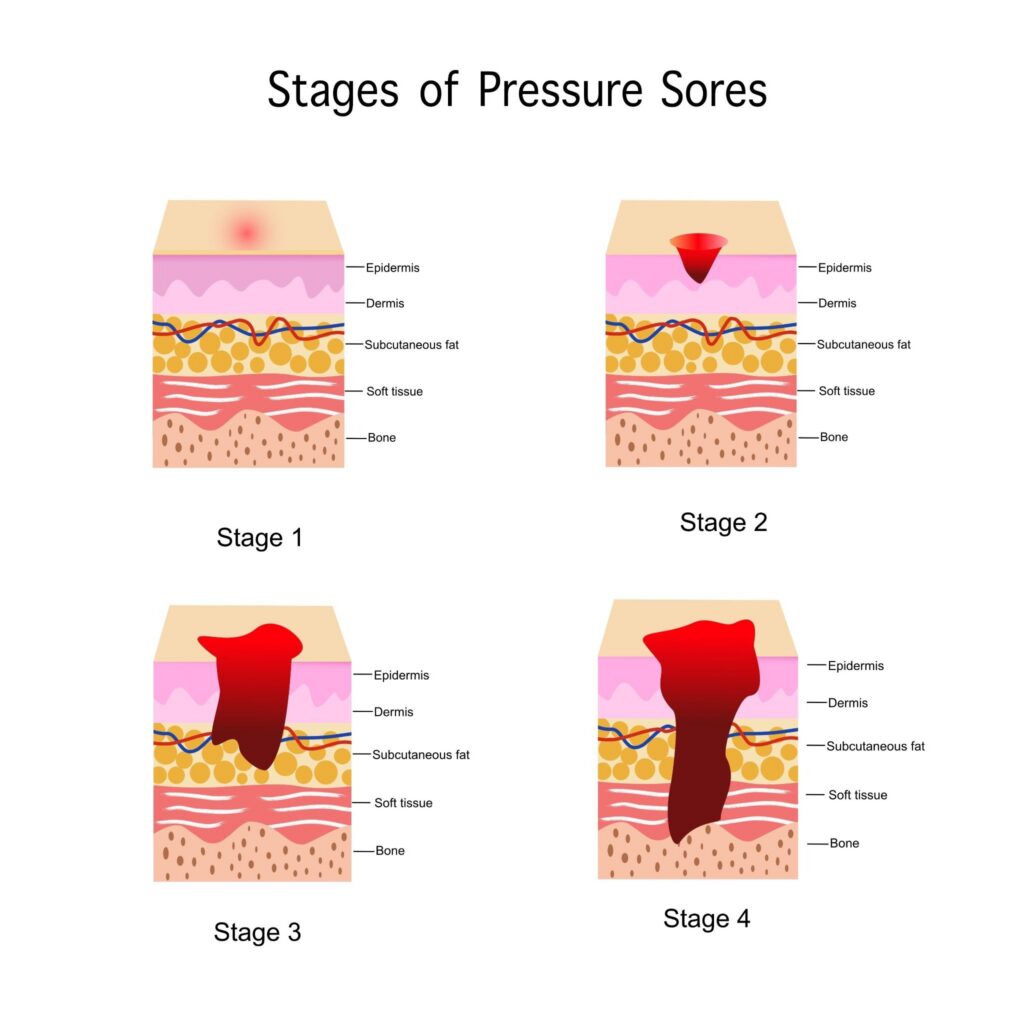
    While the skin might still be intact, the tissue underneath (the muscle and fat layers) has been damaged by intense or prolonged pressure. Because muscle is more sensitive to a lack of oxygen than skin is, it actually begins to break down first. By the time you see that “bruise” on the surface, the damage underneath has already begun. 

    Identifying the Warning Signs

    Because DTIs can evolve quickly into more serious wounds, early detection is everything. If you are caring for a loved one at home keep an eye out for these three signs in areas where bone meets the bed. The more obvious places are the heels, hips or tail bones. Some other places that are often overlooked include the elbows, the back of the head, and the shoulder blades. 

    1. Color Changes: Look for persistent deep red, purple, or maroon discoloration that doesn’t “blanch” (turn white or return to normal skin color) when you press on it. See the last blog post for how pressure injuries look different on different skin tones.
    2. Texture Shifts: Feel the skin. Does it feel mushier, firmer, warmer, or cooler than the surrounding area?
    3. Pain: Patients often report a deep, aching soreness in the area before the color even changes.

    Why Do they Happen

    Pressure is the primary culprit, but it’s rarely acting alone. Usually it is a combination of:

    • Pressure: The weight of the body squeezing tissue against a hard surface like a mattress or a chair.
    • Shear:  The skin stays in place, but the bone and deep tissue slide, common when someone “slumps” down in a recliner.
    • Microclimate: Moisture and heat on the skin can make it more vulnerable to breakdown. 

    How We Manage DTIs at Home

    If I visit a patient and identify a DTI, our goal immediately shifts to “offloading.” We have to get the pressure off that spot completely. This might involve specialized foam dressings, “floating” the heels with pillows or utilizing high-tech pressure redistribution mattresses.

    It is important to note that DTIs are unpredictable. Sometimes with excellent care and nutrition the body can reabsorb the damaged tissue. Other times the dark area may eventually open up to reveal a deeper wound. This is why professional monitoring is so vital. 

    The Takeaway

    If you notice a “bruise” on a bedbound or chair bound loved one that looks darker than usual or feels different to the touch, don’t wait. Deep tissue injuries are a race against time. Early intervention is the best tool we have to protect the skin and promote healing from the inside out. 

    Contact Circle City Foot and Medical Care today at 317-269-7351 or visit circlecityfootandmedicalcare.com to schedule an appointment for your in-home foot care.
  • Beyond Redness: Identifying Pressure Injuries on All Skin Tones

    Beyond Redness: Identifying Pressure Injuries on All Skin Tones

    In the medical world, we are often taught that the first sign of a pressure injury is “non-blancable erythema”–a fancy way of saying a red spot that doesn’t turn white when you press on it.  But there is a significant flaw in that standard: it primarily describes how a wound looks on light skin.

    As an in-home Nurse Practitioner, I see patients of all backgrounds. If we only look for “redness,” we are going to miss early warning signs in patients with darker skin tones. When a wound is missed in its early stages, it has a much higher chance of progressing into a serious, deep seating injury.

    To provide the best care, we have to look beyond color.

    The Challenge of Pigmentation and Pressure Injuries

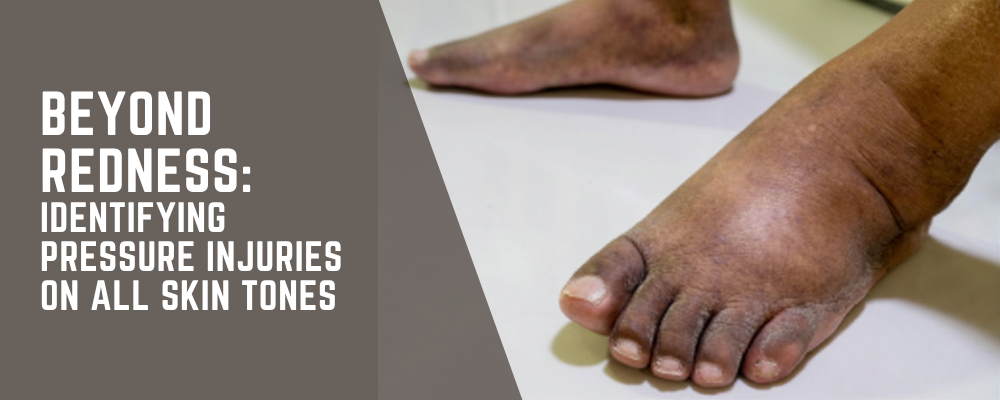
    In darker-pigmented skin, the “redness” phase may not appear at all. Instead, the skin may take on different hues, looking purple, bluish, or even slightly grayish. Because the changes can be subtle, the injury is often much more advanced by the time it is “visible” to the naked eye.

    This is why “skin of color” assessments require a more holistic approach. We aren’t just looking with our eyes; we are “looking” with our hands, and listening to the patient’s experience. 

    “Big Three” Signs to Indentify Pressure Injuries

    If you are caring for a loved one with a deeper skin tone, I recommend focusing on these three indicators rather than searching for a red spot:

    1. Temperature Changes: Before the skin breaks or changes color significantly, it will often feel different to the touch. Early on, an injured area might feel significantly warmer than the surrounding skin due to inflammation. As the injury progresses and blood flow is restricted, it might feel noticeably cooler
    2. Texture and Consistency: These are often the most reliable “early warning” signs. When you palpate (gently feel) the bony areas, like heels, sacrum, or hips, pay attention to the “give” of the tissue. 
      • Does it feel “boggy”  or mushy, like an overripe fruit?
      • Does it feel unusually firm or hard compacted to the surrounding skin?
      • Is there a “shiny” or taut appearance of the skin in that specific spot?
    3. The Patient’s Report of Pain: Never underestimate the patient’s “localized” pain. If a patient or loved one says a specific spot on their heel or tailbone feels “sore,” “burning,” or “throbbing,” treat it as a pressure injury until proven otherwise–even if the skin looks perfectly normal.

    Why Inclusive Assessment Matters

    Health disparities in wound care are a real concern. Statistics show that patients with darker skin tones are often diagnosed with pressure injuries at more advanced stages. This isn’t because their skin is “harder to care for,” but because the traditional tools for assessment weren’t designed with them in mind.

    By shifting our focus from color to consistency, temperature, and sensation, we can catch these injuries in Stage 1, where they are still reversible.

    Advice for Caregivers

    If you are monitoring a loved on at home:

    • Check in good lighting: Natural light or “cool” LED light is better than warm, yellow, indoor lighting for seeing subtle color shifts
    • Trust your touch: Your hands will often find a wound before your eyes will. 
    • Advocate: If a healthcare provider dismisses a spot because “it isn’t red,” don’t be afraid to point out changes in temperature, firmness, or the change from their normal skin tone! 
    • Color changes still happen! They just might look different than someone else’s. 

    Early detection is the best medicine. Whether skin is porcelain, olive, or deep ebony, the goal remains the same: keep the pressure off and the tissue healthy. 

    I’m currently accepting new patients in Marion and the surrounding donut counties. Contact Circle City Foot and Medical Care today at 317-269-7351 or visit circlecityfootandmedicalcare.com to schedule an appointment for your in-home foot care.