
Category: Foot Care

  • Why Managing Leg Swelling Is the Key to Healing Stubborn Lower Foot & Leg Wounds

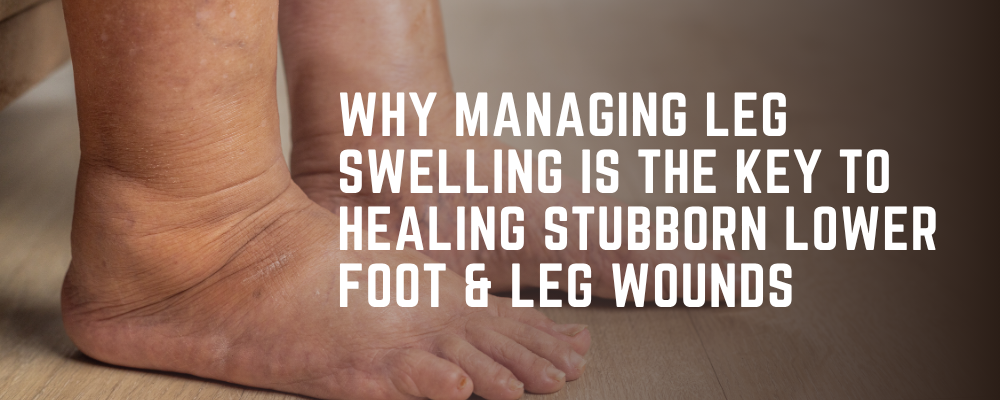
    Why Managing Leg Swelling Is the Key to Healing Stubborn Lower Foot & Leg Wounds

    Are you or a loved one dealing with a non-healing leg wound or lower foot ulcer? You’ve likely tried multiple ointments, specialized dressings, and bandages. But if the leg remains chronically swollen, those costly treatments can only do so much.

    As a Nurse Practitioner and Certified Wound Care Specialist, I share one simple rule with all my patients. Uncontrolled swelling equals delayed healing.

    Edema (fluid retention) in the lower legs isn’t just an uncomfortable symptom. It is often the direct cause of skin breakdown and the primary reason wounds fail to close. Here is how fluid buildup affects your skin and what you can do to resolve it safely at home.

    How Edema Prevents Wounds From Healing

    Fluid often pools in the lower extremities due to venous insufficiency, immobility, or cardiovascular factors. It creates a cascading series of skin issues:

    1. Smothers Cellular Oxygenation: Excess fluid increases the physical distance oxygen and nutrients must travel from capillaries to the skin cells. Without adequate oxygen, the wound bed cannot build healthy tissue.
    2. Fragile, “Paper-Thin” Skin: Chronic edema-related stretching causes stasis dermatitis. Skin becomes discolored (hemosiderin staining), dry, itchy, and extraordinarily fragile. Even a minor bump turns into a major open wound.
    3. Maceration & Heavy Drainage: Edematous wounds leak high volumes of fluid (exudate). If left unmanaged, this fluid softens and breaks down the healthy skin surrounding the wound margin, expanding the wound size.
    4. Elevated Infection Risk: Fluid-logged tissue is a breeding ground for bacteria, frequently leading to painful cellulitis or chronic wound infections.

    Key Pillars of At-Home Edema & Wound Management

    Managing swelling requires a comprehensive, daily routine rather than relying on a single quick fix:

    • Elevation Above the Heart: Gravity is your strongest ally. Elevating your legs above your heart for 45 minutes, three to four times a day, helps fluid move back toward central circulation.
    • Targeted Compression Therapy: Compression wraps, multi-layer bandage systems, or specialized stockings gently squeeze fluid out of interstitial tissues. (Note: Compression must always be clinically evaluated first to ensure arterial blood flow is adequate).
    • Skin Barrier Care: Keeping surrounding skin moisturized with gentle, fragrance-free barrier creams prevents cracking without contaminating open wound beds.
    • Gentle, Regular Movement: Ankle pumps and seated leg lifts activate the calf muscle pump, which naturally pushes venous blood and lymphatic fluid back up the body.

    Specialized Care Brought to Your Home

    Managing compression, dressing changes, and swelling for an aging relative or individual with mobility limitations can quickly become overwhelming.

    Circle City Foot and Medical Care performs lower extremity vascular and wound assessments right in the comfort of your home. We tailor advanced wound dressings and non-surgical compression therapies. This gives your skin the exact environment it needs to heal.

    Struggling with chronic leg swelling or a stubborn wound? Reach out to schedule an in-home evaluation today.

  • Why Dementia-Friendly Foot Care Matters (And How to Spot Hidden Foot Pain)

    Why Dementia-Friendly Foot Care Matters (And How to Spot Hidden Foot Pain)

    When a loved one is living with Alzheimer’s or another form of dementia, foot care is rarely the first thing on family or a caregiver’s mind. Between managing medications, meal times, and daily hygiene, inspecting toenails and soles can easily fall to the bottom of the priority list.

    However, as a Nurse Practitioner specializing in in-home senior care, I often see how minor foot issues can quietly derail a senior’s mobility, comfort, and overall well-being.

    Because individuals with cognitive decline may lose the ability to articulate physical discomfort, foot pain often goes unnoticed. Knowing what to look for—and how to make routine dementia friendly foot care a gentle, stress-free experience—can make a world of difference.

    1. Decoding the “Behavioral” Signs of Foot Pain

    When a person with dementia has a painful ingrown toenail, a severe callus, or an undetected blister, they won’t always say, “My foot hurts.” Instead, pain manifests in subtle behavioral shifts:

    • Unexplained Agitation or Aggression: Sudden mood changes during standing or transferring.
    • Refusal to Walk: Resisting daily walks or refusing to get out of a chair.
    • Changes in Gait: Limping, shuffling, or sudden loss of balance.
    • Restlessness or “Pacing”: Wandering continuously to try to escape discomfort.

    Clinical Tip: If you notice a sudden change in behavior or a reluctance to walk, start by removing their shoes and socks. The culprit is frequently an easily treatable foot issue.

    2. Creating a Calm, Environment for dementia-friendly foot care

    In-home foot exams and nail trimmings can feel overwhelming or intimidating for someone with memory loss, especially if sharp clippers or unfamiliar tools are brought out.

    To keep the experience reassuring:

    • Incorporate Routine into Hygiene: Combine foot checks with soothing daily habits, like warm washcloth wipes before bed or applying a gentle moisturizer after a bath.
    • Use Distraction: Schedule care during a favorite TV show, while listening to music from their youth, or while they hold a comforting object.
    • Keep Tools Out of Sight: Keep clippers, files, and lotions staged out of direct view to avoid triggering anxiety.
    • Focus on Communication: Speak in a slow, reassuring tone, explaining what you are doing before you touch their feet.

    3. Essential Preventative Care at Home

    A few simple practices can prevent common complications before they start:

    • Inspect Daily: Check the soles of the feet and between the toes for red spots, cracks, or moisture buildup (using a handheld mirror makes this much easier).
    • Moisturize, But Mind the Toes: Apply a thick lotion or urea-based cream to dry heels and soles, but avoid putting lotion between the toes to prevent fungal growth.
    • Check the Inside of Shoes: Inspect footwear for pebbles, torn linings, or bunched-up insoles that could create pressure points without the wearer realizing it.
    • Ditch the “Special Event” Shoes: Opt for supportive, non-slip, velcro-closure shoes or adaptive slippers that are easy to slide on and off without forcing the foot.

    When to Call a Professional

    While basic daily hygiene can be handled at home, conditions like thick fungal nails, diabetic ulcers, severe calluses, or ingrown toenails require specialized care. Attempting to trim thickened nails at home can lead to accidental cuts and infection, particularly for seniors with poor circulation or diabetes.

    At Circle City Foot and Medical Care, we bring specialized, non-surgical podiatric care directly to your living room. We work at your loved one’s pace in a familiar, comfortable setting—taking the stress out of clinical foot care for both the patient and the family.

    Need extra support managing a loved one’s foot health? Contact us today to learn more about our mobile, senior-focused clinical services.

  • Beyond Redness: Identifying Pressure Injuries on All Skin Tones

    Beyond Redness: Identifying Pressure Injuries on All Skin Tones

    In the medical world, we are often taught that the first sign of a pressure injury is “non-blancable erythema”–a fancy way of saying a red spot that doesn’t turn white when you press on it.  But there is a significant flaw in that standard: it primarily describes how a wound looks on light skin.

    As an in-home Nurse Practitioner, I see patients of all backgrounds. If we only look for “redness,” we are going to miss early warning signs in patients with darker skin tones. When a wound is missed in its early stages, it has a much higher chance of progressing into a serious, deep seating injury.

    To provide the best care, we have to look beyond color.

    The Challenge of Pigmentation and Pressure Injuries

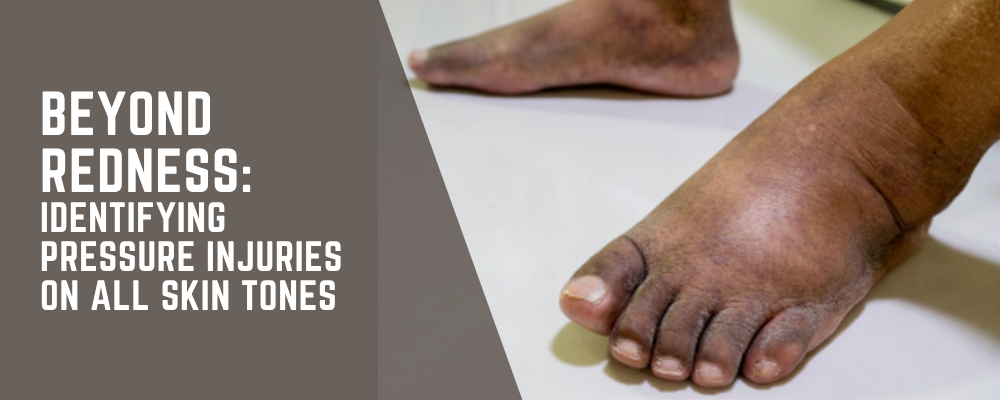
    In darker-pigmented skin, the “redness” phase may not appear at all. Instead, the skin may take on different hues, looking purple, bluish, or even slightly grayish. Because the changes can be subtle, the injury is often much more advanced by the time it is “visible” to the naked eye.

    This is why “skin of color” assessments require a more holistic approach. We aren’t just looking with our eyes; we are “looking” with our hands, and listening to the patient’s experience. 

    “Big Three” Signs to Indentify Pressure Injuries

    If you are caring for a loved one with a deeper skin tone, I recommend focusing on these three indicators rather than searching for a red spot:

    1. Temperature Changes: Before the skin breaks or changes color significantly, it will often feel different to the touch. Early on, an injured area might feel significantly warmer than the surrounding skin due to inflammation. As the injury progresses and blood flow is restricted, it might feel noticeably cooler. 
    2. Texture and Consistency: These are often the most reliable “early warning” signs. When you palpate (gently feel) the bony areas, like heels, sacrum, or hips, pay attention to the “give” of the tissue. 
      • Does it feel “boggy”  or mushy, like an overripe fruit?
      • Does it feel unusually firm or hard compacted to the surrounding skin?
      • Is there a “shiny” or taut appearance of the skin in that specific spot?
    3. The Patient’s Report of Pain: Never underestimate the patient’s “localized” pain. If a patient or loved one says a specific spot on their heel or tailbone feels “sore,” “burning,” or “throbbing,” treat it as a pressure injury until proven otherwise–even if the skin looks perfectly normal.

    Why Inclusive Assessment Matters

    Health disparities in wound care are a real concern. Statistics show that patients with darker skin tones are often diagnosed with pressure injuries at more advanced stages. This isn’t because their skin is “harder to care for,” but because the traditional tools for assessment weren’t designed with them in mind.

    By shifting our focus from color to consistency, temperature, and sensation, we can catch these injuries in Stage 1, where they are still reversible.

    Advice for Caregivers

    If you are monitoring a loved on at home:

    • Check in good lighting: Natural light or “cool” LED light is better than warm, yellow, indoor lighting for seeing subtle color shifts
    • Trust your touch: Your hands will often find a wound before your eyes will. 
    • Advocate: If a healthcare provider dismisses a spot because “it isn’t red,” don’t be afraid to point out changes in temperature, firmness, or the change from their normal skin tone! 
    • Color changes still happen! They just might look different than someone else’s. 

    Early detection is the best medicine. Whether skin is porcelain, olive, or deep ebony, the goal remains the same: keep the pressure off and the tissue healthy. 

    I’m currently accepting new patients in Marion and the surrounding donut counties. Contact Circle City Foot and Medical Care today at 317-269-7351 or visit circlecityfootandmedicalcare.com to schedule an appointment for your in-home foot care.

  • The Truth About Toenail Fungus: It’s Not What You Think

    The Truth About Toenail Fungus: It’s Not What You Think

    I want to clear the air immediately: toenail fungus is NOT a hygiene problem. Having fungus under your nails does not mean you are “dirty.” In my practice, I see fungus in the cleanest of homes. It is an opportunistic infection which means it will grow wherever the opportunity exists. Fungi love dark, moist, and warm environments–which is exactly what the inside of a shoe provides.

    Why Is It So Hard to Treat?

    One of the most common questions I get is, “Why won’t this go away?” The reality is that toenail fungus is incredibly stubborn because it lives under and within the nail plate. Because toenails grow so slowly, the treatment is a marathon, not a sprint. Topical medications often struggle to penetrate the thick nail to reach the source. Oral medication is very hard on your kidney and liver and has many drug interactions. This is why I focus on professional management and containment. 

    Does it Affect the Rest of the Body?

    While it isn’t “dangerous” to your heart, lungs, or kidneys, it is a significant issue for the health of your feet. If left unmanaged, the fungus can lead to secondary bacterial infections, like cellulitis, especially if you have diabetes. This is the real reason I want to keep a close eye on it. 

    How Fungus Changes the Way You Move

    While the fungus itself won’t make you “sick,” the physical changes it causes to your nails can change your life. As the infection progresses, the nail becomes thickened and distorted. These thick nails press against the top of your shoe with every step. To avoid that pressure, you might begin to change your gait–walking on the side of your foot or shortening your stride. Over time, this leads to knee, hip, and lower back pain. In my in-home visits, my goal is to debride these thickened nails down to normal height, immediately reducing that pressure. 

    Your Daily Defense Strategy

    While I handle the clinical trimming, there is much we can do together to keep the fungus from winning. I ask my patients to focus on these daily habits: 

    • Dry Thoroughly: After your shower, take extra time to dry between every single toe. Fungus loves moisture; don’t give it a place to grow.
    • Fresh Socks Every Day: Avoid wearing the same pair two days in a row, if possible. And giving shoes 24 hours to “breathe” helps kill off lingering spores
    • Stay Consistent: Regular professional debridement keeps the fungus from “piling up” and causing pain or even wounds. 

    Moving Forward

    If you are struggling with the appearance of your nails, please know you are not alone. My role is to provide the clinical care that makes these nails manageable, so they don’t stand in the way of your mobility and independnece. I bring clinical foot and nail care directly to your door in the Indianapolis area. Click here www.circlecityfootandmedicalcare.com to schedule your in-home assessment, or call me at 317-269-7351 to see how I can help you stay mobile.

  • 5 Common Foot Care Myths That Could Be Hurting You

    5 Common Foot Care Myths That Could Be Hurting You

    In my daily practice as a nurse practitioner, I spend a lot of time “unlearning” old habits with my patients. Many of the most common foot care beliefs are outdated or even dangerous–especially for those of us navigating the changes that come with aging. Today, I want to pull back the curtain on a few myths I encounter most often when I visit patients in their homes.

    Myth 1: “It’s Just a Foot Corn; I Can Just Cut It Off Myself.”

    This is perhaps the most dangerous myth I see. I often walk into a home and find a patient using a razor blade, scissors, or even a pocketknife to “trim” a callus or corn. In the medical world, we call this “bathroom surgery,” and it is a leading cause of serious infections. 

    Because many of my patients have decreased circulation or neuropathy, they may not feel how deep they are cutting until it is too late. When I perform a debridement, I am using sterile instruments and clinical precision to ensure the skin remains intact and safe. If you have a growth that hurts, please leave the tools in the drawer and let a professional handle it. 

    Myth 2: “Medicated Foot Corn Pads Are a Safe Way to Treat Foot Pain.”

    It is very tempting to grab a box of medicated pads from the pharmacy aisle. However, these pads usually contain salicylic acid, which is designed to eat away at thick skin. The problem is that the acid doesn’t know the difference between a hard callus and the healthy, thin skin surrounding it. For a patient with diabetes or poor circulation, these pads can cause a chemical burn that quickly turns into a non-healing wound. I always recommend avoiding these “quick fixes” in favor of identifying why the pressure is happening in the first place. 

    Myth 3: “If I Can Move My Toe, It Isn’t Broken.”

    I hear this all the time after a patient stubs a toe on a piece of furniture. Unfortunately, the ability to move a digit is not a reliable test for a fracture. You can have a significant break and still “wiggle” the toe. Ignoring a fracture can lead to improper healing, chronic pain, and long term gait issues that increase your risk of falling. If there is bruising, significant swelling, or an odd shape to the toe, I want to see it. 

    Myth 4: “Soaking My Feet in Epsom Salts Every Day is Good for My Skin.”

    While a warm soak feels relaxing, doing it daily can actually do more harm than good for aging feet. Prolonged soaking can dry out the skin significantly, leading to small cracks (fissures) that allow bacteria to enter. For my patients with neuropathy, there is also a high risk of accidental burns if the water is too hot and they cannot feel it. Instead of soaking, a high-quality urea-based cream applied daily may be the better approach; just be sure to skip the area between your toes!

    Myth 5: “Foot Pain is Just a Normal Part of Getting Older.”

    This is the myth I find the hardest. Pain is not a requirement of aging! While your feet certainly change over the years, “normal” aging should not involve constant discomfort. Pain is your body’s way of signaling that something–be it your shoes, your circulation, or your gait–needs attention

    Why a Professional Eye Matters

    When I visit you for a foot and nail care appointment, my goal is to replace these myths with clinical reality. I am looking at the “big picture” of your health, from the shoes in your closet to the pulse in your ankles. By debunking these myths and focusing on evidence-based care, we keep your foundation strong and your mobility intact. 

    Don’t let foot discomfort change the way you live your life. As a Nurse Practitioner specializing in non-surgical podiatry, I am here to help you manage chronic conditions and prevent complications before they start. Contact Circle City Foot and Medical Care today at 317-269-7351 or visit circlecityfootandmedicalcare.com to schedule an appointment for your in-home foot care.