
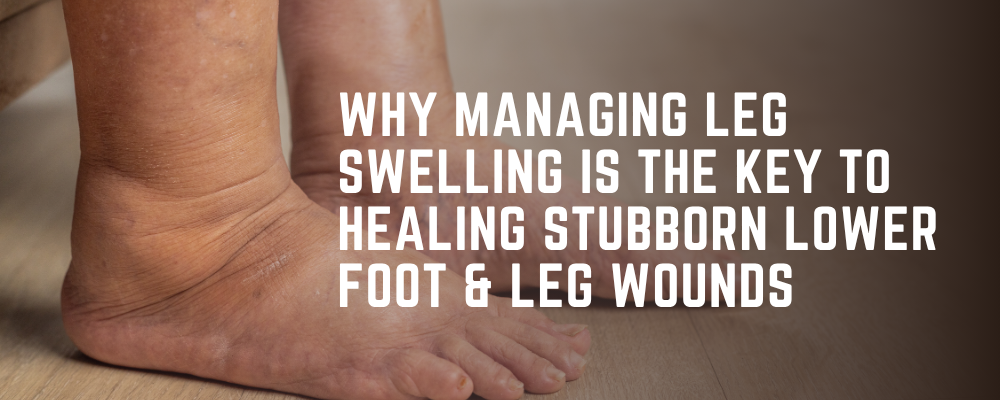
Are you or a loved one dealing with a non-healing leg wound or lower foot ulcer? You’ve likely tried multiple ointments, specialized dressings, and bandages. But if the leg remains chronically swollen, those costly treatments can only do so much.
As a Nurse Practitioner and Certified Wound Care Specialist, I share one simple rule with all my patients. Uncontrolled swelling equals delayed healing.
Edema (fluid retention) in the lower legs isn’t just an uncomfortable symptom. It is often the direct cause of skin breakdown and the primary reason wounds fail to close. Here is how fluid buildup affects your skin and what you can do to resolve it safely at home.
How Edema Prevents Wounds From Healing
Fluid often pools in the lower extremities due to venous insufficiency, immobility, or cardiovascular factors. It creates a cascading series of skin issues:
- Smothers Cellular Oxygenation: Excess fluid increases the physical distance oxygen and nutrients must travel from capillaries to the skin cells. Without adequate oxygen, the wound bed cannot build healthy tissue.
- Fragile, “Paper-Thin” Skin: Chronic edema-related stretching causes stasis dermatitis. Skin becomes discolored (hemosiderin staining), dry, itchy, and extraordinarily fragile. Even a minor bump turns into a major open wound.
- Maceration & Heavy Drainage: Edematous wounds leak high volumes of fluid (exudate). If left unmanaged, this fluid softens and breaks down the healthy skin surrounding the wound margin, expanding the wound size.
- Elevated Infection Risk: Fluid-logged tissue is a breeding ground for bacteria, frequently leading to painful cellulitis or chronic wound infections.
Key Pillars of At-Home Edema & Wound Management
Managing swelling requires a comprehensive, daily routine rather than relying on a single quick fix:
- Elevation Above the Heart: Gravity is your strongest ally. Elevating your legs above your heart for 45 minutes, three to four times a day, helps fluid move back toward central circulation.
- Targeted Compression Therapy: Compression wraps, multi-layer bandage systems, or specialized stockings gently squeeze fluid out of interstitial tissues. (Note: Compression must always be clinically evaluated first to ensure arterial blood flow is adequate).
- Skin Barrier Care: Keeping surrounding skin moisturized with gentle, fragrance-free barrier creams prevents cracking without contaminating open wound beds.
- Gentle, Regular Movement: Ankle pumps and seated leg lifts activate the calf muscle pump, which naturally pushes venous blood and lymphatic fluid back up the body.
Specialized Care Brought to Your Home
Managing compression, dressing changes, and swelling for an aging relative or individual with mobility limitations can quickly become overwhelming.
Circle City Foot and Medical Care performs lower extremity vascular and wound assessments right in the comfort of your home. We tailor advanced wound dressings and non-surgical compression therapies. This gives your skin the exact environment it needs to heal.
Struggling with chronic leg swelling or a stubborn wound? Reach out to schedule an in-home evaluation today.