Category: Wound Care

  • Pressure Prevention at Home: Turning, Floating, and Protecting the Bedbound

    Pressure Prevention at Home: Turning, Floating, and Protecting the Bedbound

    When a loved one becomes bedbound, the bed–which should be a place of rest–can quickly become a source of risk. As an in-home Nurse Practitioner, I see many families who are doing their absolute best but aren’t aware of the small, specific techniques that prevent skin breakdown.

    Pressure injuries, specifically Stage 1 injuries (where the skin is still intact but not damaged), can develop in as little as two hours! The good news? With a proactive routine, many of these are entirely preventable. Here is how you can protect your loved one’s skin at home.

    The Power of the “Turn”

    The most effective way to prevent pressure injuries is to move the body. In the hospital, we use a “Two-Hour Turn” schedule, and I recommend the same for home care.

    When we say “turning,” we don’t mean flipping someone completely over. It’s about shifting the weight off the bony prominenes–the tailbone (sacrum), hips, and shoulder blades. 

    • The 30-degree Tilt: Instead of laying someone flat on their side (which puts all of the pressure on the hip bone), tilt them to about 30 degrees and support their back with a long body pillow or wedge.
    • The Clock Method: Many families find it helpful to keep a “turning log” or set a phone timer. Even a slight shift in position can restore blood flow to compressed skin.

    “Floating” The Heels: A Non-Negotiable

    The skin on our heels is surprisingly thin, and the heel bone is quite sharp. If a patient lies on their back with their heels resting on the mattress, the weight of the entire leg is concentrated on that tiny point. 

    To “float” the heels:

    1. Place a pillow lengthwise under the calves.
    2. Ensure the pillow ends just before the ankle, allowing the heels to hang freely in the air (like they are “floating”).
    3. Pro-Tip: Never place a pillow directly under the heels or the backs of the knees, as this can increase pressure or even cause blood clots.

    Identifying Stage 1 Early

    A Stage 1 pressure injury is your “final warning.” At this stage, the skin is not yet broken, but the tissue underneath is stressed.

    • In light skin: Look for a red spot that stays red even after you remove the pressure for 30 minutes.
    • In dark skin: Look for a spot that appears purple, bluish, or “shiny,” or has some of the texture changes discussed in the last blog post.
    • The touch test: The area may feel warmer than the surrounding skin or feel “boggy” (squishy) like a bruised plum.

    Practical Tips for Caregivers

    • Check the Sheets: Wrinkles in bedsheets can act like tiny saw blades against fragile skin. Ensure the bottom sheet is pulled tight and smooth.
    • Watch the Head of the Bed: If the head of the bed is raised higher than 30 degrees, the body tends to slide down. This creates “shear,” which tears deep layers of skin. Keep the bed as flat as the patient can safely tolerate.
    • Skin Hygiene:  Use moisture barrier creams if the patient struggles with incontinence, but avoid vigorous rubbing. Friction from massage can actually cause more damage to stressed skin. 

    Preventing pressure injuries is a marathon, not a sprint. By implementing a turning schedule (while YOU are awake) and floating the heels today, you are preventing a painful and complex wound tomorrow. Contact Circle City Foot and Medical Care today at 317-269-7351 or visit circlecityfootandmedicalcare.com to schedule an appointment for your in-home foot care.

  • The “Iceberg” Wound: Understanding Deep Tissue Injuries 

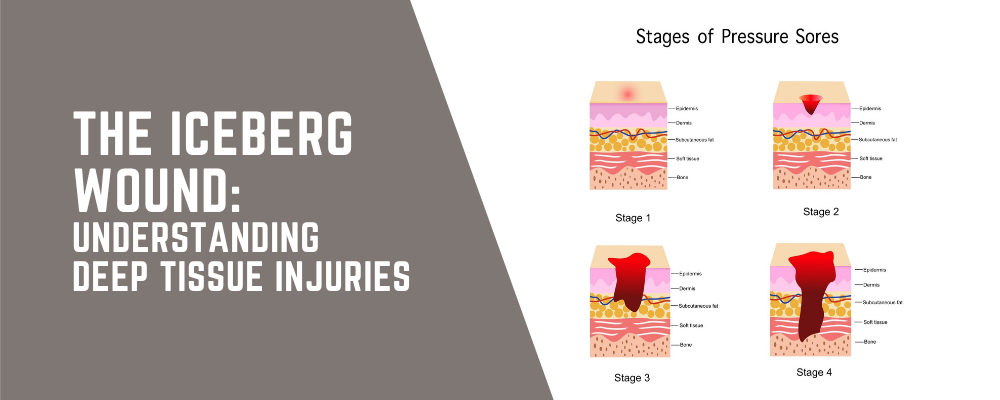
    The “Iceberg” Wound: Understanding Deep Tissue Injuries 

    When we think of a skin injury, we usually think of something that happens from the outside in, such as a scrape, a cut, or a blister. As an in-home nurse practitioner specializing in wound care, I often see a much more deceptive type of wound: the Deep Tissue Injury (DTI). 

    Unlike a typical scrape, a DTI happens from the inside out. To help my patients and their families understand this I often use the “Iceberg Analogy.” Just as most of an iceberg’s mass is hidden beneath the ocean surface the most significant damage of a DTI is hidden beneath the skin’s surface.

    What Exactly is a Deep Tissue Injury?

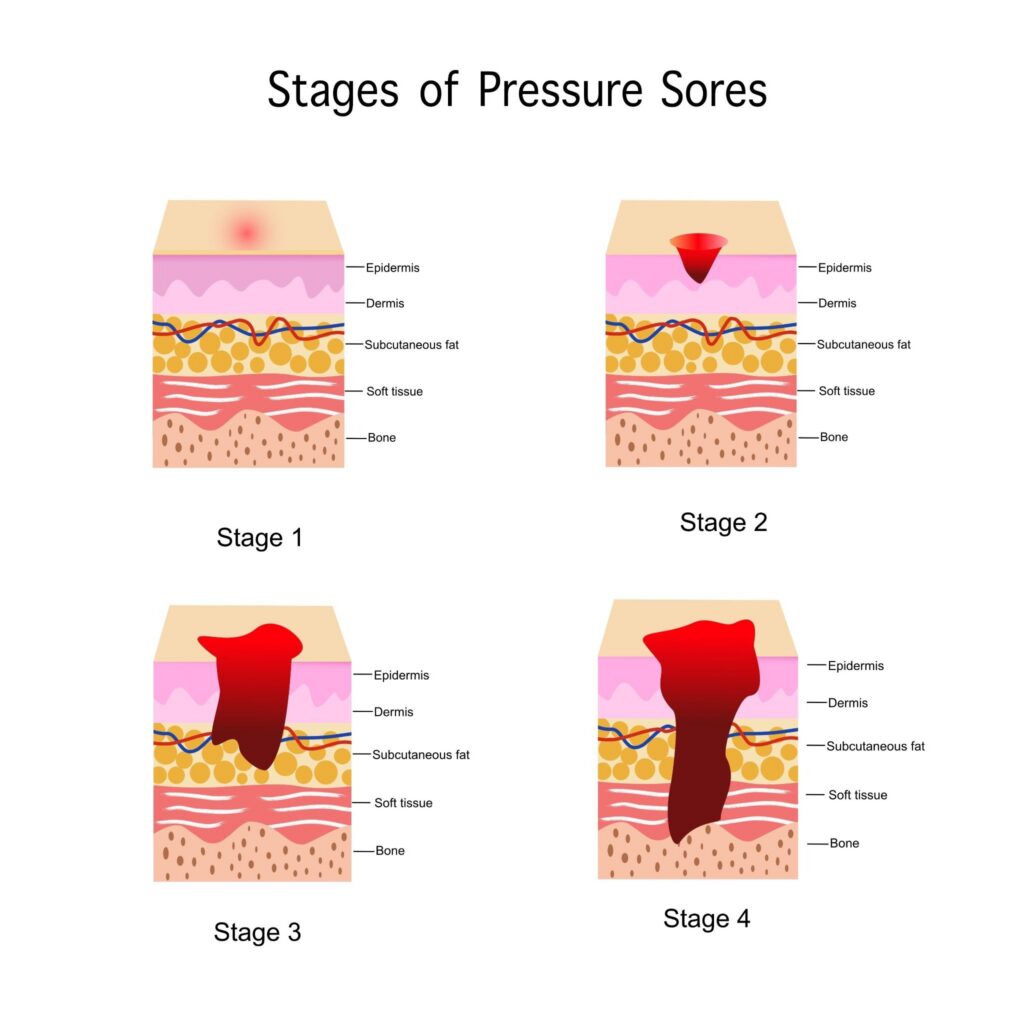
    A deep tissue injury is a unique type of pressure injury. It appears as a localized area of skin that is deep red, maroon, or purple. Sometimes it looks like a dark, blood-filled blister. 

    While the skin might still be intact, the tissue underneath (the muscle and fat layers) has been damaged by intense or prolonged pressure. Because muscle is more sensitive to a lack of oxygen than skin is, it actually begins to break down first. By the time you see that “bruise” on the surface, the damage underneath has already begun. 

    Identifying the Warning Signs

    Because DTIs can evolve quickly into more serious wounds, early detection is everything. If you are caring for a loved one at home keep an eye out for these three signs in areas where bone meets the bed. The more obvious places are the heels, hips or tail bones. Some other places that are often overlooked include the elbows, the back of the head, and the shoulder blades. 

    1. Color Changes: Look for persistent deep red, purple, or maroon discoloration that doesn’t “blanch” (turn white or return to normal skin color) when you press on it. See the last blog post for how pressure injuries look different on different skin tones.
    2. Texture Shifts: Feel the skin. Does it feel mushier, firmer, warmer, or cooler than the surrounding area?
    3. Pain: Patients often report a deep, aching soreness in the area before the color even changes.

    Why Do they Happen

    Pressure is the primary culprit, but it’s rarely acting alone. Usually it is a combination of:

    • Pressure: The weight of the body squeezing tissue against a hard surface like a mattress or a chair.
    • Shear:  The skin stays in place, but the bone and deep tissue slide, common when someone “slumps” down in a recliner.
    • Microclimate: Moisture and heat on the skin can make it more vulnerable to breakdown. 

    How We Manage DTIs at Home

    If I visit a patient and identify a DTI, our goal immediately shifts to “offloading.” We have to get the pressure off that spot completely. This might involve specialized foam dressings, “floating” the heels with pillows or utilizing high-tech pressure redistribution mattresses.

    It is important to note that DTIs are unpredictable. Sometimes with excellent care and nutrition the body can reabsorb the damaged tissue. Other times the dark area may eventually open up to reveal a deeper wound. This is why professional monitoring is so vital. 

    The Takeaway

    If you notice a “bruise” on a bedbound or chair bound loved one that looks darker than usual or feels different to the touch, don’t wait. Deep tissue injuries are a race against time. Early intervention is the best tool we have to protect the skin and promote healing from the inside out. 

    Contact Circle City Foot and Medical Care today at 317-269-7351 or visit circlecityfootandmedicalcare.com to schedule an appointment for your in-home foot care.