Tag: Indianapolis

  • Why Managing Leg Swelling Is the Key to Healing Stubborn Lower Foot & Leg Wounds

    Why Managing Leg Swelling Is the Key to Healing Stubborn Lower Foot & Leg Wounds

    Are you or a loved one dealing with a non-healing leg wound or lower foot ulcer? You’ve likely tried multiple ointments, specialized dressings, and bandages. But if the leg remains chronically swollen, those costly treatments can only do so much.

    As a Nurse Practitioner and Certified Wound Care Specialist, I share one simple rule with all my patients. Uncontrolled swelling equals delayed healing.

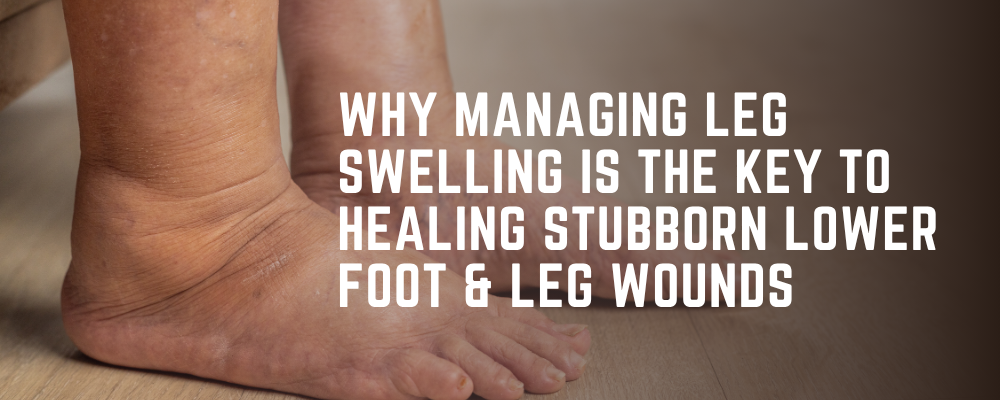
    Edema (fluid retention) in the lower legs isn’t just an uncomfortable symptom. It is often the direct cause of skin breakdown and the primary reason wounds fail to close. Here is how fluid buildup affects your skin and what you can do to resolve it safely at home.

    How Edema Prevents Wounds From Healing

    Fluid often pools in the lower extremities due to venous insufficiency, immobility, or cardiovascular factors. It creates a cascading series of skin issues:

    1. Smothers Cellular Oxygenation: Excess fluid increases the physical distance oxygen and nutrients must travel from capillaries to the skin cells. Without adequate oxygen, the wound bed cannot build healthy tissue.
    2. Fragile, “Paper-Thin” Skin: Chronic edema-related stretching causes stasis dermatitis. Skin becomes discolored (hemosiderin staining), dry, itchy, and extraordinarily fragile. Even a minor bump turns into a major open wound.
    3. Maceration & Heavy Drainage: Edematous wounds leak high volumes of fluid (exudate). If left unmanaged, this fluid softens and breaks down the healthy skin surrounding the wound margin, expanding the wound size.
    4. Elevated Infection Risk: Fluid-logged tissue is a breeding ground for bacteria, frequently leading to painful cellulitis or chronic wound infections.

    Key Pillars of At-Home Edema & Wound Management

    Managing swelling requires a comprehensive, daily routine rather than relying on a single quick fix:

    • Elevation Above the Heart: Gravity is your strongest ally. Elevating your legs above your heart for 45 minutes, three to four times a day, helps fluid move back toward central circulation.
    • Targeted Compression Therapy: Compression wraps, multi-layer bandage systems, or specialized stockings gently squeeze fluid out of interstitial tissues. (Note: Compression must always be clinically evaluated first to ensure arterial blood flow is adequate).
    • Skin Barrier Care: Keeping surrounding skin moisturized with gentle, fragrance-free barrier creams prevents cracking without contaminating open wound beds.
    • Gentle, Regular Movement: Ankle pumps and seated leg lifts activate the calf muscle pump, which naturally pushes venous blood and lymphatic fluid back up the body.

    Specialized Care Brought to Your Home

    Managing compression, dressing changes, and swelling for an aging relative or individual with mobility limitations can quickly become overwhelming.

    Circle City Foot and Medical Care performs lower extremity vascular and wound assessments right in the comfort of your home. We tailor advanced wound dressings and non-surgical compression therapies. This gives your skin the exact environment it needs to heal.

    Struggling with chronic leg swelling or a stubborn wound? Reach out to schedule an in-home evaluation today.

  • Why Dementia-Friendly Foot Care Matters (And How to Spot Hidden Foot Pain)

    Why Dementia-Friendly Foot Care Matters (And How to Spot Hidden Foot Pain)

    When a loved one is living with Alzheimer’s or another form of dementia, foot care is rarely the first thing on family or a caregiver’s mind. Between managing medications, meal times, and daily hygiene, inspecting toenails and soles can easily fall to the bottom of the priority list.

    However, as a Nurse Practitioner specializing in in-home senior care, I often see how minor foot issues can quietly derail a senior’s mobility, comfort, and overall well-being.

    Because individuals with cognitive decline may lose the ability to articulate physical discomfort, foot pain often goes unnoticed. Knowing what to look for—and how to make routine dementia friendly foot care a gentle, stress-free experience—can make a world of difference.

    1. Decoding the “Behavioral” Signs of Foot Pain

    When a person with dementia has a painful ingrown toenail, a severe callus, or an undetected blister, they won’t always say, “My foot hurts.” Instead, pain manifests in subtle behavioral shifts:

    • Unexplained Agitation or Aggression: Sudden mood changes during standing or transferring.
    • Refusal to Walk: Resisting daily walks or refusing to get out of a chair.
    • Changes in Gait: Limping, shuffling, or sudden loss of balance.
    • Restlessness or “Pacing”: Wandering continuously to try to escape discomfort.

    Clinical Tip: If you notice a sudden change in behavior or a reluctance to walk, start by removing their shoes and socks. The culprit is frequently an easily treatable foot issue.

    2. Creating a Calm, Environment for dementia-friendly foot care

    In-home foot exams and nail trimmings can feel overwhelming or intimidating for someone with memory loss, especially if sharp clippers or unfamiliar tools are brought out.

    To keep the experience reassuring:

    • Incorporate Routine into Hygiene: Combine foot checks with soothing daily habits, like warm washcloth wipes before bed or applying a gentle moisturizer after a bath.
    • Use Distraction: Schedule care during a favorite TV show, while listening to music from their youth, or while they hold a comforting object.
    • Keep Tools Out of Sight: Keep clippers, files, and lotions staged out of direct view to avoid triggering anxiety.
    • Focus on Communication: Speak in a slow, reassuring tone, explaining what you are doing before you touch their feet.

    3. Essential Preventative Care at Home

    A few simple practices can prevent common complications before they start:

    • Inspect Daily: Check the soles of the feet and between the toes for red spots, cracks, or moisture buildup (using a handheld mirror makes this much easier).
    • Moisturize, But Mind the Toes: Apply a thick lotion or urea-based cream to dry heels and soles, but avoid putting lotion between the toes to prevent fungal growth.
    • Check the Inside of Shoes: Inspect footwear for pebbles, torn linings, or bunched-up insoles that could create pressure points without the wearer realizing it.
    • Ditch the “Special Event” Shoes: Opt for supportive, non-slip, velcro-closure shoes or adaptive slippers that are easy to slide on and off without forcing the foot.

    When to Call a Professional

    While basic daily hygiene can be handled at home, conditions like thick fungal nails, diabetic ulcers, severe calluses, or ingrown toenails require specialized care. Attempting to trim thickened nails at home can lead to accidental cuts and infection, particularly for seniors with poor circulation or diabetes.

    At Circle City Foot and Medical Care, we bring specialized, non-surgical podiatric care directly to your living room. We work at your loved one’s pace in a familiar, comfortable setting—taking the stress out of clinical foot care for both the patient and the family.

    Need extra support managing a loved one’s foot health? Contact us today to learn more about our mobile, senior-focused clinical services.

  • Partner Spotlight: How KSS Insurance Helps Our Patients Protect Their Health

    Partner Spotlight: How KSS Insurance Helps Our Patients Protect Their Health

    At Circle City Foot and Medical Care, our mission is to deliver medical-grade, non-surgical podiatry and healthcare directly to your door. We spend our days inside our patients’ homes, where we see firsthand how crucial overall wellness, mobility, and peace of mind are to maintaining independence.

    True health, however, extends beyond clinical care—it also means having the right safety net in place when life changes. That is why we are proud to spotlight one of our trusted community partners: KSS Insurance.

    When we visit patients throughout Central Indiana, one of the most common sources of stress we hear about isn’t just physical pain—it’s navigating the complex world of Medicare, health insurance, and long-term coverage.

    Finding the right plan can feel overwhelming, especially for seniors or families managing complex care needs. Steve Boone, Karl Downey, and the KSS Insurance team take the confusion out of the process. They don’t just sell policies; they act as dedicated advocates who take the time to understand each client’s unique medical and financial situation.

    The Independent Agency Advantage

    What sets KSS Insurance apart is their commitment to personalized, local service. As independent insurance agents, they aren’t tied to a single carrier. Instead, they evaluate options across multiple top-tier providers to find the exact Medicare Advantage, Medicare Supplement, or health plan that fits your life.

    Here is what makes KSS Insurance an invaluable resource for our patients:

    • True Advocacy: They walk you through every line of your coverage options, ensuring you maximize your benefits and avoid costly coverage gaps.
    • Simplifying Medicare: Whether you are turning 65 or re-evaluating your current coverage during enrollment, they break down complex jargon into clear, actionable advice.
    • Family-First Approach: Like us, Steve and Karl treat every client like family, offering honest guidance grounded in integrity and respect.
    • Ongoing Support: They don’t disappear after you sign up. When healthcare needs shift or plans change, KSS is right there to help you adapt your coverage.

    Supporting Your Health from the Ground Up

    In-home medical care and proper health insurance go hand in hand. While Circle City keeps you mobile, comfortable, and safe in your home environment, KSS Insurance ensures that your healthcare decisions are financially protected and stress-free.

    When our patients have reliable coverage, they can focus entirely on what matters most: their health, their recovery, and enjoying their independence.

    A Message from Rosie Moore, NP

    We only align Circle City Foot and Medical Care with professionals who reflect our dedication to compassionate, high-quality care. Steve and Karl at KSS Insurance share our deep commitment to serving the Central Indiana community with heart and expertise.

    If you, a parent, or a loved one have questions about navigating Medicare, evaluating your current health coverage, or ensuring your insurance plan truly supports your healthcare needs, we highly recommend reaching out to KSS Insurance.

    Connect with KSS Insurance:

    As always, if you or a family member are in need of specialized, in-home non-surgical foot care or medication management, Circle City Foot and Medical Care is here to help keep you moving comfortably at home.

  • Pressure Prevention at Home: Turning, Floating, and Protecting the Bedbound

    Pressure Prevention at Home: Turning, Floating, and Protecting the Bedbound

    When a loved one becomes bedbound, the bed–which should be a place of rest–can quickly become a source of risk. As an in-home Nurse Practitioner, I see many families who are doing their absolute best but aren’t aware of the small, specific techniques that prevent skin breakdown.

    Pressure injuries, specifically Stage 1 injuries (where the skin is still intact but not damaged), can develop in as little as two hours! The good news? With a proactive routine, many of these are entirely preventable. Here is how you can protect your loved one’s skin at home.

    The Power of the “Turn”

    The most effective way to prevent pressure injuries is to move the body. In the hospital, we use a “Two-Hour Turn” schedule, and I recommend the same for home care.

    When we say “turning,” we don’t mean flipping someone completely over. It’s about shifting the weight off the bony prominenes–the tailbone (sacrum), hips, and shoulder blades. 

    • The 30-degree Tilt: Instead of laying someone flat on their side (which puts all of the pressure on the hip bone), tilt them to about 30 degrees and support their back with a long body pillow or wedge.
    • The Clock Method: Many families find it helpful to keep a “turning log” or set a phone timer. Even a slight shift in position can restore blood flow to compressed skin.

    “Floating” The Heels: A Non-Negotiable

    The skin on our heels is surprisingly thin, and the heel bone is quite sharp. If a patient lies on their back with their heels resting on the mattress, the weight of the entire leg is concentrated on that tiny point. 

    To “float” the heels:

    1. Place a pillow lengthwise under the calves.
    2. Ensure the pillow ends just before the ankle, allowing the heels to hang freely in the air (like they are “floating”).
    3. Pro-Tip: Never place a pillow directly under the heels or the backs of the knees, as this can increase pressure or even cause blood clots.

    Identifying Stage 1 Early

    A Stage 1 pressure injury is your “final warning.” At this stage, the skin is not yet broken, but the tissue underneath is stressed.

    • In light skin: Look for a red spot that stays red even after you remove the pressure for 30 minutes.
    • In dark skin: Look for a spot that appears purple, bluish, or “shiny,” or has some of the texture changes discussed in the last blog post.
    • The touch test: The area may feel warmer than the surrounding skin or feel “boggy” (squishy) like a bruised plum.

    Practical Tips for Caregivers

    • Check the Sheets: Wrinkles in bedsheets can act like tiny saw blades against fragile skin. Ensure the bottom sheet is pulled tight and smooth.
    • Watch the Head of the Bed: If the head of the bed is raised higher than 30 degrees, the body tends to slide down. This creates “shear,” which tears deep layers of skin. Keep the bed as flat as the patient can safely tolerate.
    • Skin Hygiene:  Use moisture barrier creams if the patient struggles with incontinence, but avoid vigorous rubbing. Friction from massage can actually cause more damage to stressed skin. 

    Preventing pressure injuries is a marathon, not a sprint. By implementing a turning schedule (while YOU are awake) and floating the heels today, you are preventing a painful and complex wound tomorrow. Contact Circle City Foot and Medical Care today at 317-269-7351 or visit circlecityfootandmedicalcare.com to schedule an appointment for your in-home foot care.

  • The “Iceberg” Wound: Understanding Deep Tissue Injuries 

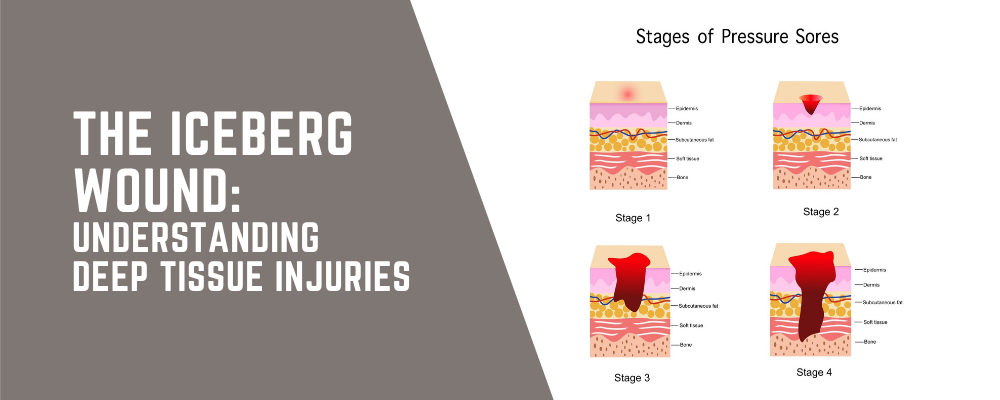
    The “Iceberg” Wound: Understanding Deep Tissue Injuries 

    When we think of a skin injury, we usually think of something that happens from the outside in, such as a scrape, a cut, or a blister. As an in-home nurse practitioner specializing in wound care, I often see a much more deceptive type of wound: the Deep Tissue Injury (DTI). 

    Unlike a typical scrape, a DTI happens from the inside out. To help my patients and their families understand this I often use the “Iceberg Analogy.” Just as most of an iceberg’s mass is hidden beneath the ocean surface the most significant damage of a DTI is hidden beneath the skin’s surface.

    What Exactly is a Deep Tissue Injury?

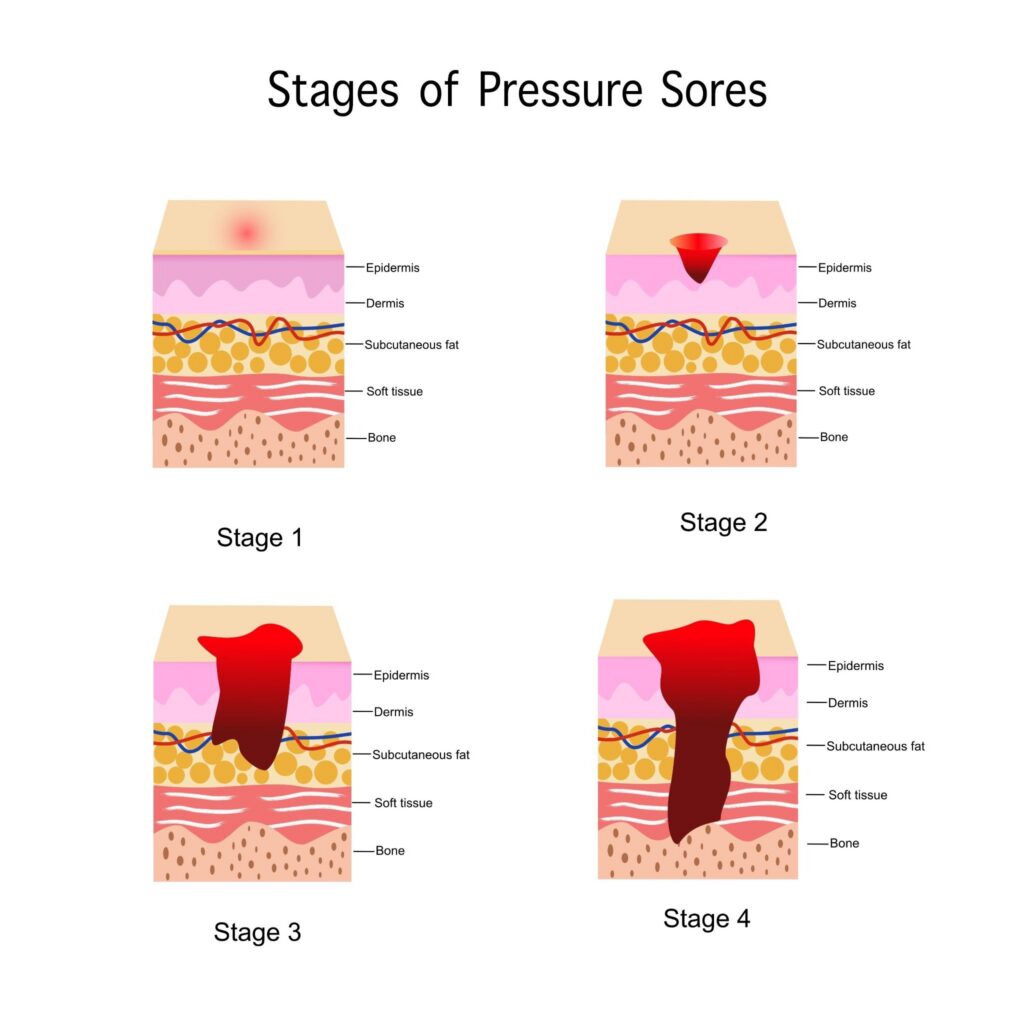
    A deep tissue injury is a unique type of pressure injury. It appears as a localized area of skin that is deep red, maroon, or purple. Sometimes it looks like a dark, blood-filled blister. 

    While the skin might still be intact, the tissue underneath (the muscle and fat layers) has been damaged by intense or prolonged pressure. Because muscle is more sensitive to a lack of oxygen than skin is, it actually begins to break down first. By the time you see that “bruise” on the surface, the damage underneath has already begun. 

    Identifying the Warning Signs

    Because DTIs can evolve quickly into more serious wounds, early detection is everything. If you are caring for a loved one at home keep an eye out for these three signs in areas where bone meets the bed. The more obvious places are the heels, hips or tail bones. Some other places that are often overlooked include the elbows, the back of the head, and the shoulder blades. 

    1. Color Changes: Look for persistent deep red, purple, or maroon discoloration that doesn’t “blanch” (turn white or return to normal skin color) when you press on it. See the last blog post for how pressure injuries look different on different skin tones.
    2. Texture Shifts: Feel the skin. Does it feel mushier, firmer, warmer, or cooler than the surrounding area?
    3. Pain: Patients often report a deep, aching soreness in the area before the color even changes.

    Why Do they Happen

    Pressure is the primary culprit, but it’s rarely acting alone. Usually it is a combination of:

    • Pressure: The weight of the body squeezing tissue against a hard surface like a mattress or a chair.
    • Shear:  The skin stays in place, but the bone and deep tissue slide, common when someone “slumps” down in a recliner.
    • Microclimate: Moisture and heat on the skin can make it more vulnerable to breakdown. 

    How We Manage DTIs at Home

    If I visit a patient and identify a DTI, our goal immediately shifts to “offloading.” We have to get the pressure off that spot completely. This might involve specialized foam dressings, “floating” the heels with pillows or utilizing high-tech pressure redistribution mattresses.

    It is important to note that DTIs are unpredictable. Sometimes with excellent care and nutrition the body can reabsorb the damaged tissue. Other times the dark area may eventually open up to reveal a deeper wound. This is why professional monitoring is so vital. 

    The Takeaway

    If you notice a “bruise” on a bedbound or chair bound loved one that looks darker than usual or feels different to the touch, don’t wait. Deep tissue injuries are a race against time. Early intervention is the best tool we have to protect the skin and promote healing from the inside out. 

    Contact Circle City Foot and Medical Care today at 317-269-7351 or visit circlecityfootandmedicalcare.com to schedule an appointment for your in-home foot care.