
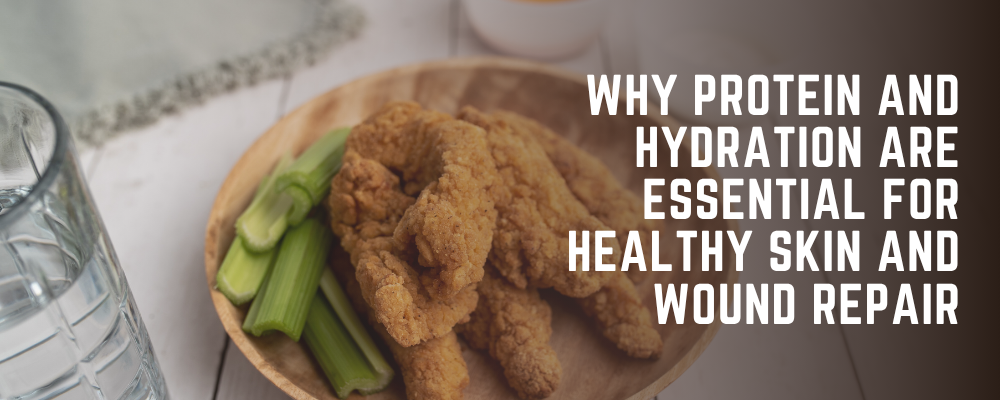
When managing a stubborn wound, surgical incision, or fragile skin, most people focus almost entirely on topical care. Salves, ointments, and specialized bandages are helpful. While proper dressing choice is crucial, true tissue repair happens from the inside out.
As a Nurse Practitioner and Wound Care Specialist, I remind my patients and their families that your body requires building blocks to repair itself. If your diet lacks sufficient protein and hydration, skin becomes fragile, tissue breaks down easily, and healing stalls. No matter how advanced your wound dressings are.
Here is how nutrition directly impacts your skin integrity and what you can do to support your body’s natural healing power.
1. Protein: The Ultimate Building Block for Skin Repair
Skin is composed primarily of structural proteins like collagen and elastin. When you sustain a wound—or fragile skin breaks—your body demands more protein to repair damaged microvessels and form healthy granulation (new) tissue.
When protein intake is too low, the body experiences:
- Delayed Tissue Regeneration: Without amino acids, the body cannot synthesize new collagen.
- Loss of Muscle Mass: The body will borrow protein from lean muscle tissue to attempt healing, leading to weakness and increased fall risk.
- Fragile Skin: Skin becomes thin, inelastic, and prone to “skin tears” from minor friction.
Clinical Target: Standard guidelines recommend 0.8 grams of protein per kilogram of body weight for healthy adults. But individuals healing open wounds often require 1.2 to 1.5 grams per kilogram (unless restricted by advanced kidney disease).
Easy In-Home Protein Boosts for Seniors:
- Soft options like Greek yogurt, cottage cheese, scrambled eggs, and smooth nut butters.
- Adding high-quality protein powders or medical nutrition supplements to morning oatmeal or smoothies.
- Incorporating shredded chicken, bone broth, or legumes into soups and stews.
2. Hydration: Supporting Circulation and Skin Elasticity
Water makes up roughly 60% of the human body. Skin is one of the first organs to show signs of dehydration. For tissue to heal, oxygen and nutrients must travel through tiny capillaries to reach the wound bed. This process that relies heavily on proper fluid volume.
Chronic dehydration leads to:
- Poor Tissue Perfusion: Blood becomes more viscous, slowing down the delivery of vital nutrients and oxygen to skin cells.
- Dry, Compromised Skin: Dehydrated skin loses elasticity and cracks easily, creating entry points for dangerous bacterial infections.
- Ineffective Waste Removal: Hydration helps flush away cellular debris and toxins from the wound site.
Hydration Tips Beyond Plain Water:
- Seniors often experience a decreased sense of thirst. Set a visual goal, like filling a specific water pitcher each morning to finish by bedtime.
- Offer hydrating foods high in water content: watermelons, cucumbers, berries, applesauce, and warm broths.
- Limit excessive caffeine, which can act as a mild diuretic and contribute to fluid loss.
Mobile, Comprehensive Medical Care in Your Home
Nutrition, vascular health, and wound hygiene must work together for complete healing. At Circle City Foot and Medical Care, we evaluate all the factors influencing your skin health. That includes systemic nutrition and circulation to specialized non-surgical wound care—right in the comfort and convenience of your home.
Are you or a loved one dealing with a non-healing wound or fragile skin? Contact us today to schedule an in-home medical evaluation.